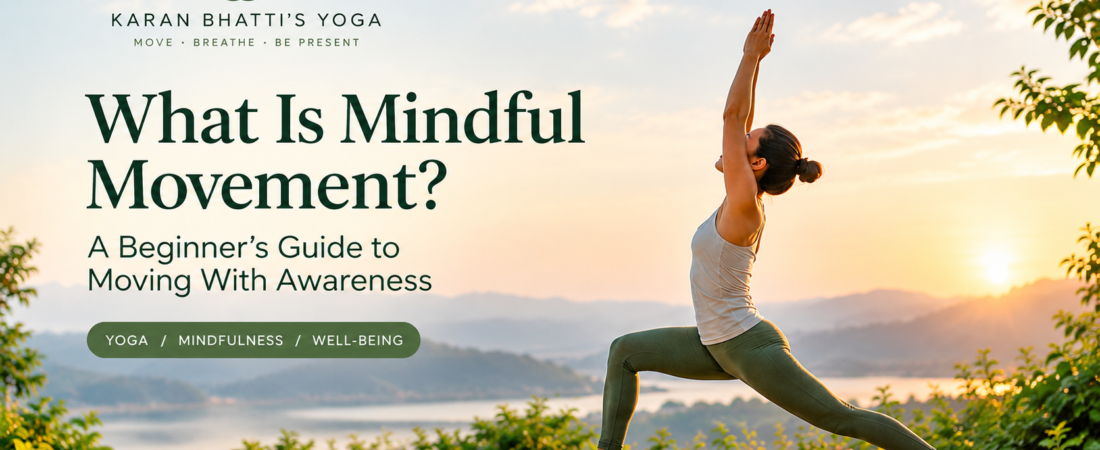
Karan Bhatti Yoga: Mindful movement is the practice of bringing your attention fully into your body and the movements you are making. Instead of rushing through exercises or treating movement as something you simply need to complete, mindful movement encourages you to slow down, notice your breathing, observe how your body feels, and move with intention.
Yoga is one of the most well-known ways to practice mindful movement. Through a combination of movement, breathing, balance, and awareness, yoga can provide an opportunity to develop a deeper connection between the body and mind.
For beginners, mindful movement does not require complicated poses or advanced flexibility. It begins with something much simpler: paying attention.
What Is Mindful Movement?
Mindful movement means being present while you move.
In everyday life, it is easy to move without thinking about what we are doing. We walk while looking at our phones, sit for long periods without noticing our posture, or rush through physical activities while our attention is somewhere else.
Mindful movement offers a different approach.
When practicing mindful movement, you can pay attention to:
- How your body feels
- The rhythm of your breathing
- The position of your body
- How your muscles respond to movement
- Your balance and stability
- The pace of your movements
- How you feel before and after the practice
The goal is not to perform every movement perfectly. Instead, the practice is about developing awareness and becoming more connected with the present moment.
How Does Yoga Connect With Mindful Movement?
Yoga naturally creates opportunities for mindful movement because it combines physical postures with breathing and awareness.
Rather than simply moving from one pose to another, a mindful yoga practice encourages you to notice what is happening throughout each movement.
For example, during a simple standing posture, you might notice how your feet connect with the ground, how your spine feels, whether your shoulders are relaxed, and how your breath changes as you hold the position.
This approach can make yoga feel less like a performance and more like a personal practice.
You do not need to compare your practice with someone else’s. Your attention remains on your own movement, breathing, and experience.
Why Is Mindful Movement Important?
Modern life often encourages us to move quickly from one task to another. Our attention can become divided between work, school, technology, conversations, responsibilities, and countless other activities.
Mindful movement creates an opportunity to pause.
Even a short period of intentional movement can give you time to notice your body and reconnect with the present moment.
One of the most valuable aspects of mindful movement is that it encourages you to listen to your body rather than automatically pushing through discomfort.
This can be particularly useful for beginners who are learning how different movements feel and discovering what works best for their individual practice.
7 Benefits of Practicing Mindful Movement
Mindful movement can become a valuable part of a balanced lifestyle. While everyone’s experience is different, regular practice may support several aspects of physical and mental well-being.
1. Greater Body Awareness
One of the main principles of mindful movement is paying attention to physical sensations.
You may begin to notice your posture, balance, breathing patterns, muscle tension, and the way your body responds to different movements.
Over time, this awareness can help you become more familiar with your own body.
2. A More Focused Practice
When your attention is on your breathing and movement, it becomes easier to stay present.
Instead of thinking about what happened earlier or what you need to do later, you have a specific activity to focus on.
Yoga can provide a structured environment in which this type of attention can develop.
3. Better Connection Between Breath and Movement
Breathing is an important part of yoga.
Mindful movement encourages you to notice the relationship between your breath and physical movement. You may coordinate certain movements with inhalation or exhalation, creating a more deliberate and steady practice.

This connection can help make your yoga sessions feel more intentional.
4. Improved Balance and Coordination
Many yoga movements require awareness of your position and stability.
Practicing slowly and with attention can give you more opportunities to notice how your body maintains balance.
You do not have to master difficult balancing poses. Even simple standing movements can become exercises in awareness.
5. A Chance to Slow Down
Mindful movement gives you permission to move at a pace that allows you to pay attention.
This can be especially valuable when your daily routine feels busy.
A yoga session can create a dedicated period where you step away from distractions and focus on your practice.
6. Greater Appreciation of Movement
When movement becomes something you experience rather than something you rush through, you may develop a different relationship with physical activity.
Instead of focusing only on results, you can appreciate the process itself.
This can make a regular yoga practice feel more sustainable and personal.
7. A Stronger Mind-Body Connection
Mindful movement brings physical awareness and mental attention together.
As you practice, you may become more aware of how your thoughts, breathing, emotions, and physical sensations interact.
This mind-body connection is an important part of many yoga traditions and contemporary mindfulness practices.
How Can Beginners Start Practicing Mindful Movement?
You do not need a complicated routine to begin.
Start with a few simple movements and focus on doing them slowly and intentionally.
Start With Your Breathing
Before beginning your movements, take a moment to notice your natural breathing.
There is no need to force your breath. Simply observe it.
Notice the rhythm of your inhalation and exhalation and how your body responds.
Move Slowly
Try slowing down your movements.
A slower pace gives you more time to notice your posture, balance, and physical sensations.
This does not mean every yoga session needs to be slow. It simply means choosing a pace that allows you to remain aware.
Focus on One Movement at a Time
Instead of worrying about the entire sequence, concentrate on the movement you are doing right now.
Notice where your body is positioned and how the movement feels.
Avoid Comparing Yourself With Others
Yoga is a personal practice.
Different people have different levels of experience, mobility, balance, and comfort. Comparing your movements with another person’s can distract you from your own experience.
Mindful movement is about awareness rather than competition.
Finish With a Moment of Stillness
After practicing, take a short moment to sit or lie comfortably and notice how you feel.
You might observe your breathing, your energy level, or simply the sensations in your body.
This gives you an opportunity to recognize the transition from movement to stillness.
Mindful Movement vs. Regular Exercise
Mindful movement and traditional exercise do not have to be viewed as competing approaches.
Exercise often focuses on developing physical abilities such as strength, endurance, mobility, or cardiovascular fitness. Mindful movement places additional emphasis on awareness, attention, breathing, and the experience of moving.
A person can include both in their routine.
For example, someone might enjoy walking, swimming, cycling, or strength training while also practicing yoga or other forms of mindful movement.
The important thing is finding forms of movement that are appropriate, enjoyable, and sustainable for you.
Can You Practice Mindful Movement at Home?
Yes. You can begin with a small amount of space and a simple routine.
A quiet area can make it easier to concentrate, although complete silence is not necessary.
You can begin with basic movements such as:
- Gentle stretches
- Comfortable standing poses
- Simple balance exercises
- Slow transitions between movements
- Breathing awareness
- A few minutes of quiet reflection
The key is not how large your practice space is or how advanced your poses are. The focus is on being present with your movement.
How Often Should You Practice?
There is no single schedule that works for everyone.
Some people prefer short daily sessions, while others practice several times a week.
Consistency can be more useful than trying to complete an intense session occasionally.
Even a short practice can provide an opportunity to reconnect with your body and attention.
As you become more familiar with mindful movement, you can gradually develop a routine that fits naturally into your lifestyle.
What Should Beginners Remember About Yoga?
If you are new to yoga, remember that you do not need to be extremely flexible or experienced to begin.
Yoga is not about forcing your body into a particular shape. It is an opportunity to explore movement, breathing, awareness, and balance at a pace that feels appropriate for you.
Listen to your body and avoid forcing movements that cause pain. If you have an injury, medical condition, or specific concern about physical activity, consider speaking with an appropriate healthcare professional before beginning a new exercise routine.
Most importantly, give yourself permission to learn.
Your first yoga session does not need to look like someone else’s practice.
Developing a More Mindful Yoga Practice
Mindful movement can gradually become more than something you do during a yoga session. The awareness developed through practice can encourage you to notice how you sit, stand, walk, breathe, and move throughout your day.
You might begin by asking yourself simple questions:
How am I breathing right now?
What am I noticing in my body?
Am I rushing this movement?
Can I slow down and pay attention?
These small moments of awareness can change the way you experience movement.
Final Thoughts
Mindful movement is ultimately about being present with your body.
You do not need advanced yoga skills, complicated routines, or perfect poses to begin. Start with simple movements, pay attention to your breathing, and give yourself time to notice how your body feels.
Yoga provides a natural environment for developing this awareness by bringing together movement, breath, balance, and mindfulness.
Whether you are completely new to yoga or looking to make your existing practice more intentional, mindful movement can offer a simple way to reconnect with yourself—one breath and one movement at a time.
At Karan Bhatti’s Yoga, the focus is on creating a thoughtful approach to movement and mindfulness. Explore the available yoga classes and workshops to discover a practice that fits your individual journey.
Frequently Asked Questions
What is mindful movement?
Mindful movement is the practice of moving with awareness and attention. It involves noticing your breathing, body position, physical sensations, and the movement itself rather than performing movements automatically.
Is yoga a form of mindful movement?
Yes. Yoga can be practiced as mindful movement because it combines physical postures with breathing, concentration, and body awareness.
Can beginners practice mindful movement?
Absolutely. Mindful movement does not require advanced flexibility or experience. Beginners can start with simple movements and gradually develop their awareness.
Do I need to be flexible to practice yoga?
No. Flexibility is not a requirement for beginning yoga. A yoga practice can be adapted to different bodies, abilities, and experience levels.
How long should a mindful movement session be?
There is no universal ideal duration. Even a short session can provide an opportunity to focus on movement and breathing. The most useful routine is one that fits comfortably into your lifestyle and can be practiced consistently.
What is the main goal of mindful movement?
The main goal is awareness. Instead of focusing only on completing a movement or achieving a particular pose, mindful movement encourages you to pay attention to your body, breathing, and present experience.